
HBOT vs Traditional Treatments: Which Is Better for Healing?
HBOT vs Traditional Treatments: Which Is Better for Healing?
Science-Backed Comparison | Active Clinics Birmingham
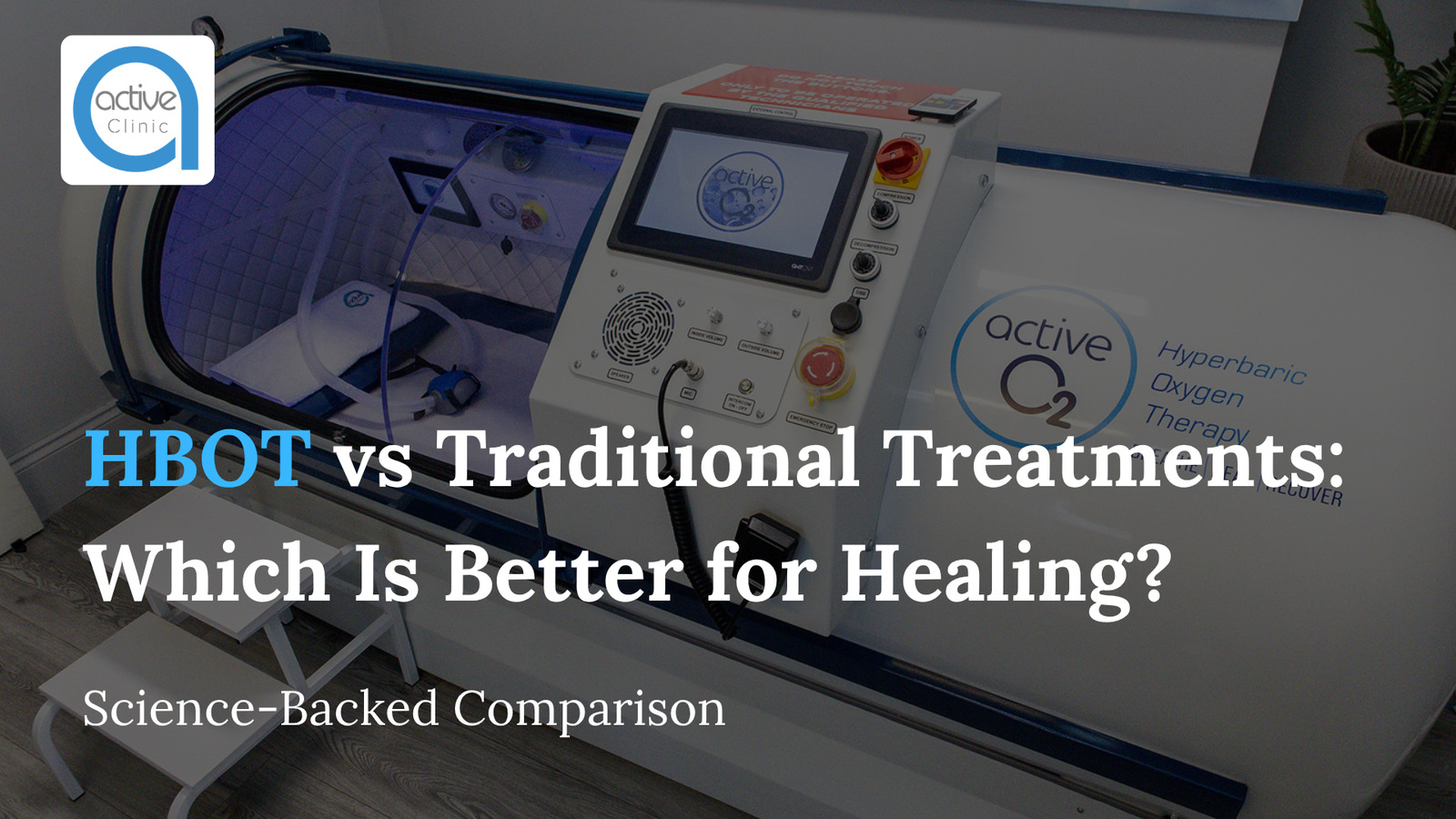
When something goes wrong with the body, most of us reach for the familiar: rest, medication, physiotherapy, or surgery. These are the tools conventional medicine has relied on for decades, and for good reason. They work. But for a growing number of people in Birmingham, they are no longer the whole answer.
Hyperbaric Oxygen Therapy Birmingham is increasingly being considered alongside, and in some cases instead of, traditional treatments for healing. The question worth asking is not whether HBOT is revolutionary. It is whether the evidence justifies it as a genuinely better option for certain conditions, and what that means for how you approach your own recovery.
This blog gives you an honest, research-backed answer.
What Traditional Healing Treatments Typically Involve
Traditional treatments for healing span a broad range, from rest, anti-inflammatory medication, and physiotherapy at one end, to surgical intervention at the other. Each has a defined role and a well-documented evidence base. The limitations, however, are also well understood.
- Anti-inflammatory drugs reduce pain and swelling but do not accelerate tissue repair
- Physiotherapy rehabilitates function but depends entirely on the body's own healing capacity
- Surgery addresses structural damage but creates new tissue trauma requiring its own recovery
- Antibiotics clear bacterial infection but have no effect on tissue repair or oxygenation
- All conventional approaches work best in well-oxygenated, well-perfused tissue
Research: Sen et al. (2009), Wound Repair and Regeneration, highlighted that the majority of conventional wound care strategies address the symptoms of poor healing rather than the root cause, which is inadequate tissue oxygenation. The authors concluded that addressing oxygen delivery directly should be considered a primary rather than adjunctive treatment goal.
How HBOT Approaches Healing Differently
Hyperbaric Oxygen Therapy Birmingham works at a level that most traditional treatments do not reach. Rather than managing symptoms or repairing structural damage directly, HBOT addresses the fundamental biological environment in which healing occurs. By breathing almost 100% pure oxygen inside a pressurised chamber at 2 times normal atmospheric pressure, oxygen dissolves directly into blood plasma and tissue fluid, reaching cells that reduced circulation cannot adequately supply.
This creates conditions in which the body's own repair mechanisms can operate at a level that is simply not possible in oxygen-depleted tissue. New blood vessels form, stem cells are mobilised, collagen synthesis accelerates, and immune cells function more effectively.
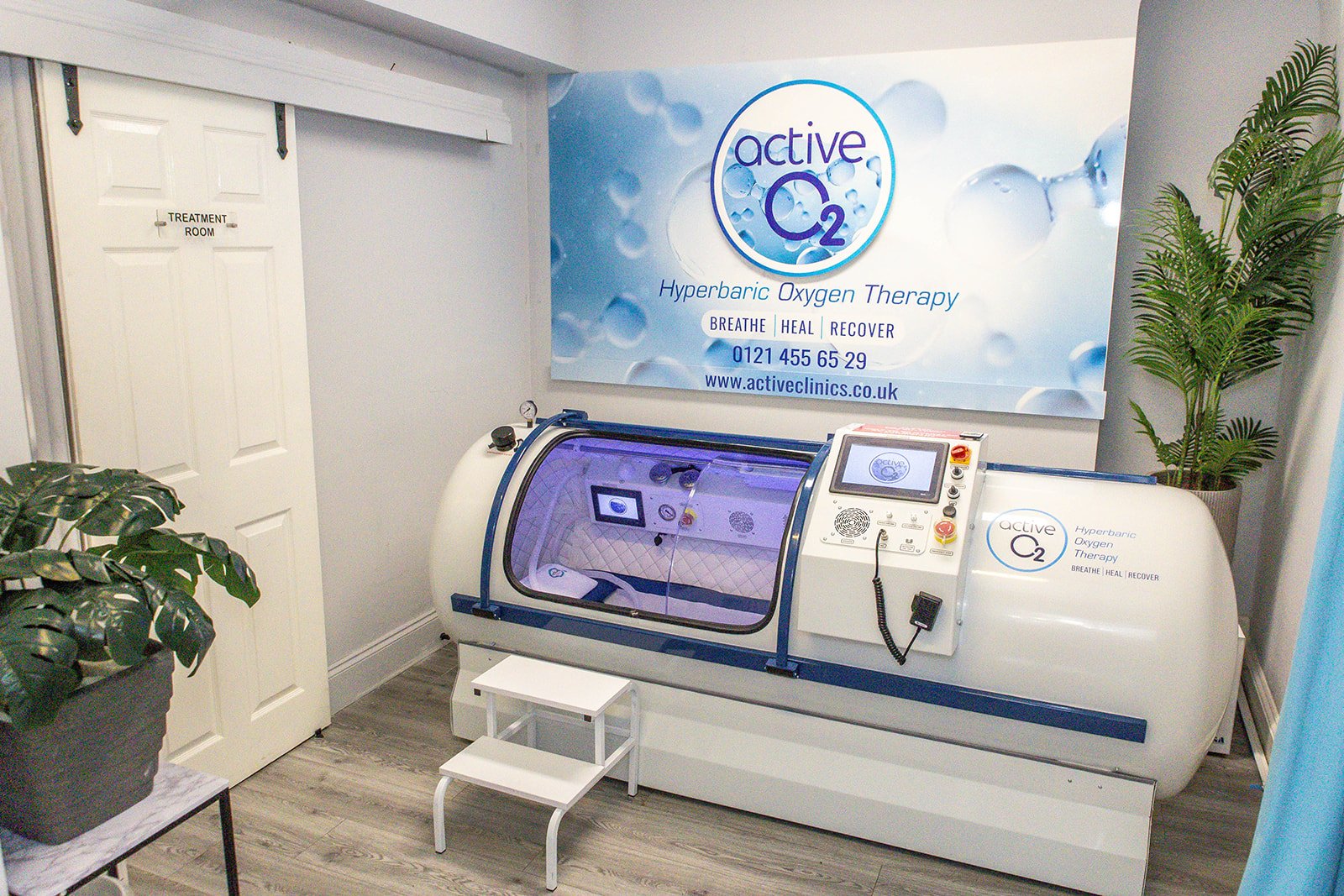
- Increases dissolved plasma oxygen by up to 2,000% compared to normal breathing
- Reaches damaged tissue through diffusion, independent of compromised circulation
- Triggers angiogenesis, stem cell mobilisation, and collagen synthesis simultaneously
- Creates an environment hostile to anaerobic bacteria without antibiotic use
Research: Thom SR (2011), Plastic and Reconstructive Surgery, reviewed the mechanisms of HBOT and confirmed that pressurised oxygen delivery addresses wound hypoxia directly, producing outcomes in chronic non-healing wounds that conventional care alone consistently fails to achieve. The review identified HBOT as the only non-surgical intervention with Level 1 evidence for improving oxygenation in ischaemic tissue.
HBOT vs Anti-Inflammatory Medication
Non-steroidal anti-inflammatory drugs, commonly known as NSAIDs, are among the most widely used treatments for pain and swelling associated with injury and post-surgical recovery. They are effective at symptom management but carry well-documented risks with prolonged use, including gastrointestinal damage, cardiovascular risk, and impaired bone and soft tissue healing with extended courses.
HBOT produces measurable anti-inflammatory effects through an entirely different and drug-free mechanism. By suppressing pro-inflammatory cytokines and activating anti-inflammatory pathways, it reduces inflammation systemically without the side effect profile associated with long-term NSAID use.
- NSAIDs reduce inflammation symptomatically but do not accelerate underlying tissue repair
- Long-term NSAID use is associated with gastrointestinal, renal, and cardiovascular risk
- Some research suggests NSAIDs may actually impair long-term bone and tendon healing
- HBOT reduces inflammatory cytokines including TNF-alpha and IL-1 without systemic drug side effects
Research: Bhatt DL et al. (2017), New England Journal of Medicine, published findings from the PRECISION trial confirming that all classes of NSAIDs carry measurable cardiovascular risk with regular use, reinforcing the clinical value of drug-free anti-inflammatory alternatives such as HBOT for patients requiring ongoing inflammation management.
Active Clinics Insight: Many clients at Active Clinics Birmingham use Hyperbaric Oxygen Therapy Birmingham as part of a strategy to reduce their reliance on anti-inflammatory medication, particularly those managing chronic inflammatory conditions or recovering from injury.
HBOT vs Physiotherapy for Tissue Repair
Physiotherapy is a cornerstone of rehabilitation for musculoskeletal injury, post-surgical recovery, and neurological conditions. It improves function, restores range of motion, and rebuilds strength. What it cannot do is alter the biological environment of the tissue being rehabilitated.
HBOT does not replace physiotherapy. It enhances the environment in which physiotherapy works. By improving tissue oxygenation, reducing inflammation, and stimulating new blood vessel and collagen formation before and during a rehabilitation programme, HBOT can meaningfully improve the speed and quality of tissue repair that physiotherapy then works to functionalise.
- Physiotherapy rehabilitates function but cannot improve tissue oxygenation directly
- HBOT creates a superior healing environment for the tissue physiotherapy is working on
- Combined protocols have shown faster return to function compared to physiotherapy alone
- HBOT is particularly valuable in the early stages of recovery when tissue repair is most active
Research: Barata P et al. (2011), Undersea and Hyperbaric Medicine, found that patients undergoing HBOT alongside standard rehabilitation for sports injuries demonstrated significantly faster recovery of functional strength and tissue repair markers compared to those receiving rehabilitation alone, with the authors recommending HBOT as a standard adjunct to sports injury rehabilitation protocols.
HBOT vs Surgery: A Complementary Rather Than Competing Role
It is worth being clear that HBOT is not a surgical alternative for conditions requiring structural repair. A torn ligament, a fractured bone requiring fixation, or a herniated disc pressing on a nerve will need appropriate surgical or procedural intervention. HBOT's role in relation to surgery is not competitive but complementary.
Where HBOT adds genuine value in the surgical context is in the preparation of tissue before surgery, the acceleration of post-surgical healing, and the management of complications such as surgical site infection or impaired wound healing. For patients with compromised circulation or healing capacity, HBOT can be the difference between a successful surgical outcome and a prolonged complication.
- Pre-surgical HBOT can improve tissue oxygenation and reduce post-operative complication risk
- Post-surgical HBOT accelerates wound healing and reduces infection risk
- Particularly valuable for patients with diabetes, peripheral vascular disease, or poor wound healing history
- Reduces the length and severity of post-surgical inflammatory response
Research: Londahl M et al. (2010), Diabetes Care, conducted a randomised controlled trial of HBOT as an adjunct to standard care in diabetic foot ulcers. The study found that 52% of patients in the HBOT group achieved complete wound healing compared to 29% in the control group, representing a clinically and statistically significant improvement in surgical wound management outcomes.
Where HBOT Has a Clear Evidence-Based Advantage
For certain conditions, the published evidence for HBOT is strong enough that it is now included in clinical guidelines alongside or in preference to conventional care. Understanding where HBOT holds this advantage helps Birmingham clients identify whether it is relevant to their specific situation.
- Chronic non-healing wounds, particularly diabetic foot ulcers: strong Level 1 evidence
- Radiation-induced tissue damage following cancer treatment: established clinical use
- Sudden sensorineural hearing loss when treated within 24 to 72 hours of onset
- Decompression sickness and arterial gas embolism: internationally recognised primary treatment
- Carbon monoxide poisoning: HBOT is the definitive treatment of choice
- Post-viral and chronic fatigue syndromes: growing body of clinical research
Research: Bennett MH et al. (2016), Cochrane Database of Systematic Reviews, confirmed HBOT as an evidence-based intervention for diabetic foot ulcers, carbon monoxide poisoning, and radiation tissue injury, with the review authors noting that HBOT achieved outcomes in these conditions that conventional care consistently failed to replicate.
Supporting HBOT with Complementary Therapies at Active Clinics Birmingham
HBOT works best as part of a broader approach to healing and wellness. At Active Clinics Birmingham, clients combine it with treatments that support recovery from different directions, creating a more complete protocol than any single therapy can achieve alone.
IV Drip Therapy Birmingham delivers the nutritional cofactors, particularly Vitamin C, B vitamins, magnesium, and glutathione, that oxygen-dependent healing processes depend on. Vitamin B12 Injections Birmingham support red blood cell production and neurological repair, both relevant to healing and recovery.
Cryotherapy Chamber Birmingham reduces systemic inflammation and boosts circulation, complementing HBOT's tissue repair effects. For clients with skin health goals, HIFU Treatment Birmingham, Dr Schrammek Green Peel Birmingham, Skin Peels Birmingham, and Fusion Plasma CAP Therapy Birmingham all benefit from the improved cellular oxygenation and collagen-building environment that HBOT creates. Skin Tag Removal Birmingham and Tattoo Removal Birmingham are also available as part of a comprehensive skin health approach at Active Clinics.
Active Clinics Insight: The most effective protocols at Active Clinics Birmingham combine HBOT with nutritional support through IV Drip Therapy Birmingham or Vitamin B12 Injections Birmingham, addressing both oxygen delivery and the nutritional environment that healing depends on simultaneously.
Frequently Asked Questions
Does HBOT replace conventional medical treatment?
No. HBOT works best alongside conventional medical care, not in place of it. For conditions requiring medication, surgery, or physiotherapy, HBOT enhances the biological environment in which those treatments work. In specific conditions such as carbon monoxide poisoning or diabetic foot ulcers, it is the primary evidence-based intervention, but in most cases it functions as a powerful adjunct.
How many HBOT sessions will I need alongside other treatment?
This depends entirely on your condition and goals. Acute recovery protocols may involve 10 to 20 sessions. Chronic conditions or intensive wellness programmes may involve more. A consultation at Active Clinics Birmingham will establish the most appropriate protocol for your specific situation.
Is HBOT available on the NHS in Birmingham?
HBOT is available on the NHS for a limited number of specific conditions including decompression sickness, carbon monoxide poisoning, and certain radiation injuries. For wellness, recovery, anti-ageing, and most other applications, it is accessed through private clinics such as Active Clinics Birmingham.
The Verdict: Not a Competition, but a Combination
The honest answer to whether HBOT is better than traditional treatments is that it depends on what you are treating and what you are comparing it to. For conditions driven by tissue hypoxia, chronic inflammation, or impaired healing capacity, HBOT has a strong, well-documented evidence base that traditional care cannot match on its own. For structural repair, rehabilitation, and acute medical management, conventional treatments remain essential.
What the evidence points to, consistently, is that the best outcomes come from combining HBOT with conventional care rather than choosing between them. For Birmingham residents looking to heal faster, recover more completely, or address chronic conditions that have not responded adequately to standard treatment, Hyperbaric Oxygen Therapy Birmingham offers a clinically grounded, compelling addition to any healing strategy.
Visit activeclinics.co.uk to book a consultation and find out how HBOT could fit into your recovery plan.
activeclinics.co.uk | Hyperbaric Oxygen Therapy Birmingham | IV Drip Therapy Birmingham | Cryotherapy Chamber Birmingham | Vitamin B12 Injections Birmingham
Our Team
We are a dedicated team of qualified skin specialists, health and wellness experts, and professional sports therapists, committed to helping you look, feel, and perform your best
Learn More